Projection Mapping Is One of the Fastest-Growing Segments in Live Events
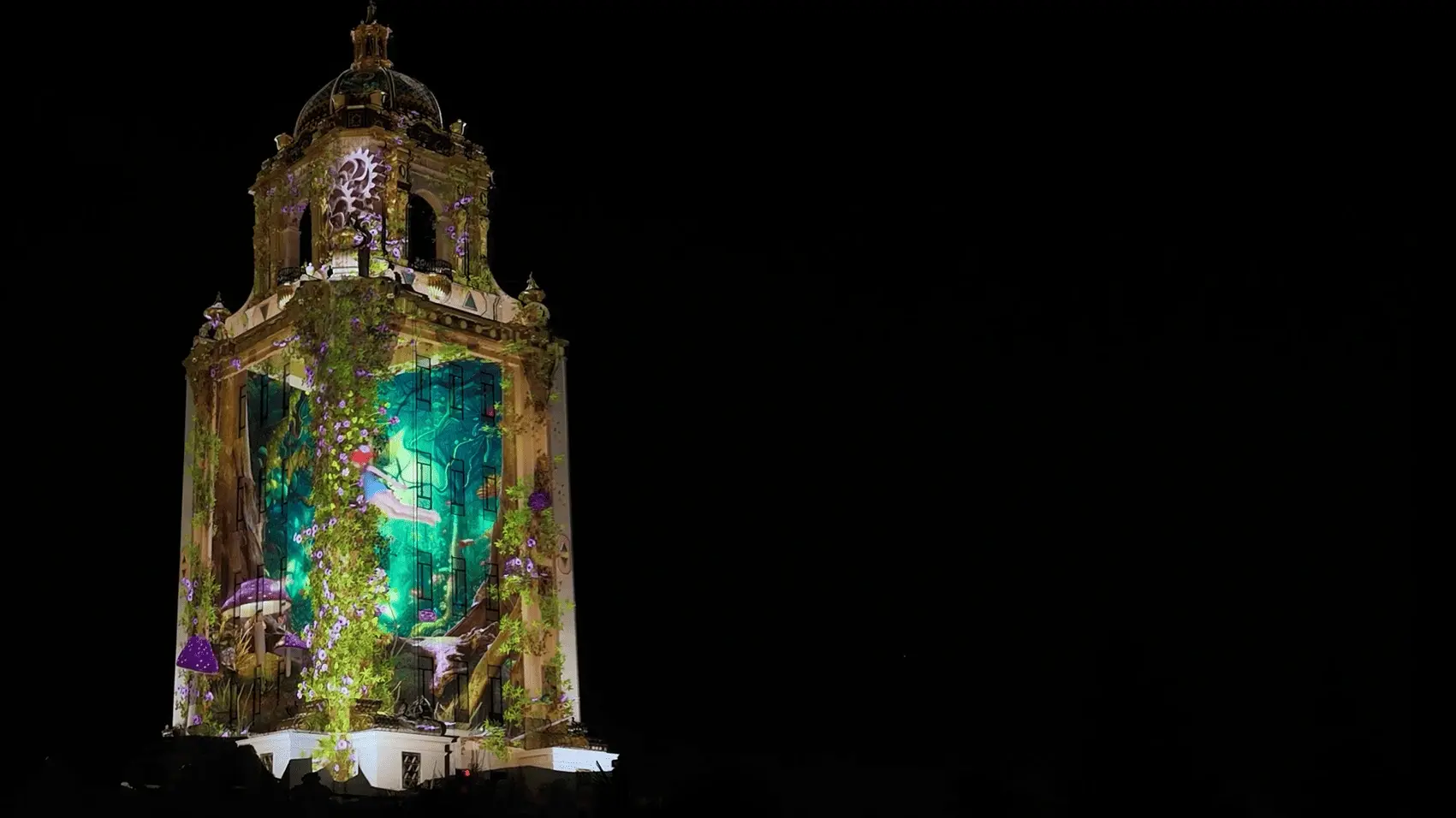
If you are a brand marketer, event producer, or experiential agency in the United States or Canada, you are operating in one of the most dynamic visual technology markets in the world. Projection mapping — the art of turning physical surfaces into dynamic, responsive canvases — has moved well beyond novelty. It is now a core component of how leading brands communicate at scale.
The data backs this up definitively.
Market Size and Growth: The Hard Numbers
The global projection mapping market was valued at approximately $4.6–$5.7 billion in 2024, and is projected to grow at a CAGR of between 17% and 23% through 2030–2032. Research firms converge on a market reaching between $16 and $21 billion by 2032.
North America is the single largest regional market, commanding roughly 34–35% of global revenue in 2024. The region's dominance is driven by a dense concentration of Fortune 500 brands, a mature event production ecosystem, and early adoption of immersive entertainment formats. From Disney's theme parks to Super Bowl halftime shows to corporate product launches in Las Vegas, North America sets the global benchmark for projection mapping at scale.
Key Market Statistics
- Global projection mapping market (2024): $4.0–5.7B USD
- Projected market value by 2032: $16–21B USD
- Market CAGR (2025–2032): 17–23%
- North America market share (2024): ~34–35% of global revenue
- Events and Festivals segment share: 41.8% of applications in 2024
- Retail and Entertainment segment (North America): 41.5% market share in 2025
- 3D projection mapping: fastest-growing sub-segment through 2032
- Software CAGR: 30.12% as AI-driven tools replace manual workflows
Where Brands Are Investing
The events and festivals segment dominates projection mapping applications, accounting for 41.8% of market share in 2024. This reflects the technology's unique ability to transform any physical space — a building facade, a stage, a product surface — into a branded, narrative-driven experience.
In North America specifically, the retail and entertainment segment leads at 41.5% of market share in 2025, driven by large-scale concerts, sports events, festivals, and corporate activations. The key applications shaping investment decisions include:
- Corporate events and product launches — Projection mapping turns reveals into cinematic moments that generate significant earned media through social sharing
- Sports arenas — Court-covering projections during player introductions allow sponsors to rotate branded content per game, transforming existing infrastructure into premium advertising inventory
- Theme parks — Growing at a 25.86% CAGR, with Disney and Universal leading investment. A 2025 Disney installation demonstrated 18% hourly throughput gains by distributing crowds through immersive mapped corridors
- Building facades and civic installations — Capturing 28.7% of 2024 revenue, with municipalities and real estate developers using non-permanent visual storytelling to market cultural identity
- Corporate campuses and lobbies — Fortune 500 companies integrating real-time projection mapping to communicate ESG milestones and brand values to employees and stakeholders
Technology Shifts Reshaping the Industry
AI Is Compressing Production Timelines
Artificial intelligence is fundamentally changing how projection mapping is designed, deployed, and operated. AI-driven platforms now automate UV unwrapping, texture generation, and edge-blend optimization — tasks that previously required weeks of specialized labor. Total deployment times have compressed from months to weeks, enabling a new wave of mid-budget corporate activations that were previously cost-prohibitive.
Software is the fastest-growing component of the market, advancing at a 30.12% CAGR as subscription-based cloud models replace one-time hardware purchases. Software providers are achieving gross margins above 60%, compared to the mid-20s typical for projector hardware manufacturers — a dynamic that is accelerating investment in AI-driven tooling.
Laser Projection Economics
RGB laser modules surpassed traditional lamp systems in 2024 on lifetime cost calculations. The advantages are decisive for enterprise buyers: laser systems eliminate consumables, reduce power draw by 30–50%, and deliver instant-on functionality. For event producers running multiple short shows per day, this translates directly to increased per-day revenue and better unit economics.
The high-brightness segment (above 30,000 lumens) is the fastest-growing brightness tier, driven by outdoor events and large venue installations requiring extreme visual impact regardless of ambient light. Christie's Griffyn 4K50-RGB projector, deployed at the 2024 Burning Man Festival, delivers over 50,000 lumens for large-scale immersive projections.
4D Integration: The Next Frontier
The 4D projection mapping segment — integrating sound, motion, scent, and tactile elements — is projected to grow at 28.17% CAGR through 2030. Universal Studios and Disney are leading adoption in theme parks, but the format is increasingly viable for high-end corporate events targeting premium audiences. When touch, sound, and physical sensation are synchronized with projection, the experience becomes physiologically memorable in ways that passive viewing cannot achieve.
The Business Case: ROI Metrics for Decision-Makers
Beyond the aesthetic impact, the business metrics are compelling. Research indicates that building-scale projection experiences boost on-site dwell time by up to 40% — a critical metric for retail environments and event spaces where extended engagement correlates directly with conversion and revenue.
User-generated content is another major driver. Immersive projection experiences generate disproportionate social sharing: when attendees photograph or video a mapped surface and share it, the brand's visual message reaches audiences far beyond the physical event. In a landscape where organic reach is increasingly scarce and expensive, this amplification effect represents significant earned media value on top of the event investment.
The rental and staging segment is projected to grow fastest through 2032, driven by brands opting for flexible, cost-effective solutions. Rather than investing in permanent installations, the on-demand model allows brands to access cutting-edge projection technology for specific campaigns or launches without long-term capital commitment — a structure that aligns well with how marketing budgets are increasingly managed.
The North American Competitive Landscape
The US market is anchored around major event production hubs: Las Vegas, Los Angeles, New York, Miami, Chicago, and the Boston–Washington DC corridor. The East Coast corridor alone represents one of the world's densest concentrations of Fortune 500 companies, pharmaceutical organizations, and financial institutions — all of which are increasing experiential marketing budgets.
Recent landmark deployments illustrate the market's scale and ambition. The 2024 Illuminus Festival in Boston deployed high-resolution projection across city blocks. The 2024 Super Bowl halftime show featured Panasonic 3D mapping technology that transformed the performance stage into animated environments watched by over 100 million viewers. In March 2025, Panasonic powered the world's largest permanent projection mapping display at Tokyo's Metropolitan Government Building — spanning over 13,900 square meters and certified by Guinness World Records. Installations of this scale are setting new expectations among brand and event directors globally.
What This Means for Brands Evaluating Projection Mapping in 2025
The market data points to a clear signal: projection mapping is no longer reserved for mega-budgets. AI-driven workflow automation, laser projection economics, and flexible rental models have democratized access to technology that was previously viable only for the largest productions.
For brands in the US and Canada evaluating experiential marketing spend, the strategic questions are:
- What physical surfaces in your event or venue can be transformed into brand-responsive canvases?
- Does your event produce shareable content that extends reach beyond the room?
- Is your experience differentiated enough to drive dwell time, engagement, and social amplification?
The brands answering yes to these questions — and investing accordingly — are capturing disproportionate audience attention in an increasingly saturated media landscape.
NewMedia in North America
NewMedia Creative Technology Studio has delivered over 400 immersive projects globally across 15+ years of operation. With our North American base in New Jersey, we serve major markets including New York, Miami, Las Vegas, Los Angeles, and Chicago, with the same production standard that has defined our work in Europe. For the fundamentals of how projection mapping works, see our Projection Mapping Complete Guide, or explore our projection mapping services for US brand activations. If you are planning a projection mapping or large-scale immersive experience and want to talk about what is genuinely possible, contact us at welcome@newmedia.events.