The $40 Billion Problem With How Brands Build Exhibition Stands
Every year, the global exhibition industry generates an estimated 400,000 tons of waste — the majority of it from single-use stand construction. Wood frames covered in vinyl graphics, custom-printed backdrops, foam displays, and bespoke furniture pieces are built, used for three days, and then sent to landfill. The environmental cost is substantial. The financial cost is almost equally significant: brands that commission new builds for every event are spending budget on materials that provide zero value beyond a single show.
In 2026, the most sophisticated brand exhibitors have recognized that this model is both unsustainable and strategically inferior. Technology-driven exhibition stand design — building the stand experience around digital systems, reusable structural elements, and AI-powered content — delivers better audience engagement, stronger brand differentiation, and lower total cost of ownership than conventional single-use approaches.
What Technology-Driven Stand Design Actually Means
Technology-driven stand design is not simply adding a screen to a conventional booth. It is a fundamentally different approach to how a stand is conceived, budgeted, and built — one in which digital systems are the primary experience delivery mechanism rather than printed graphics and physical displays.
The structural elements of a technology-driven stand are designed to be permanent, modular, and reconfigurable. Aluminum extrusion systems, LED screen frames, transparent display mounting structures, and modular flooring platforms are built to be transported, reassembled, and reconfigured for different event footprints without degradation. The brand presence changes with every event through new digital content — not through new physical construction.
Content becomes the consumable, not the structure. Instead of paying to reprint graphics and rebuild walls, brands invest in new digital content that can be developed, reviewed, and approved in advance of each event. The content cost per event is a fraction of the construction cost it replaces, and it can be repurposed across multiple channels — the event screen, the brand's digital platforms, and post-event content libraries.
The Core Technology Components of a Modern Exhibition Stand
Transparent LED panels are one of the most powerful tools in technology-driven stand design. High-transparency LED displays — with 50 to 70 percent optical transparency — allow brands to create visually commanding presences that define territory without closing off the stand to passing traffic. Visitors can see into the stand through the displays, creating an open, inviting environment while the content draws attention from significant distances.
Large-format LED walls deliver the visual impact that brands previously achieved through large printed backdrops, with the additional capability of displaying motion content, real-time data, and product visualizations. Modern fine-pitch LED panels are thin enough to be integrated seamlessly into stand architecture, creating surfaces that function simultaneously as structural elements and display media.
Interactive touchscreen systems replace printed product literature and static information displays with dynamic content experiences that adapt to the specific interests of each visitor. Integrated lead capture — triggered by content interactions rather than requiring visitors to complete forms — generates higher-quality contact data than conventional badge scanning.
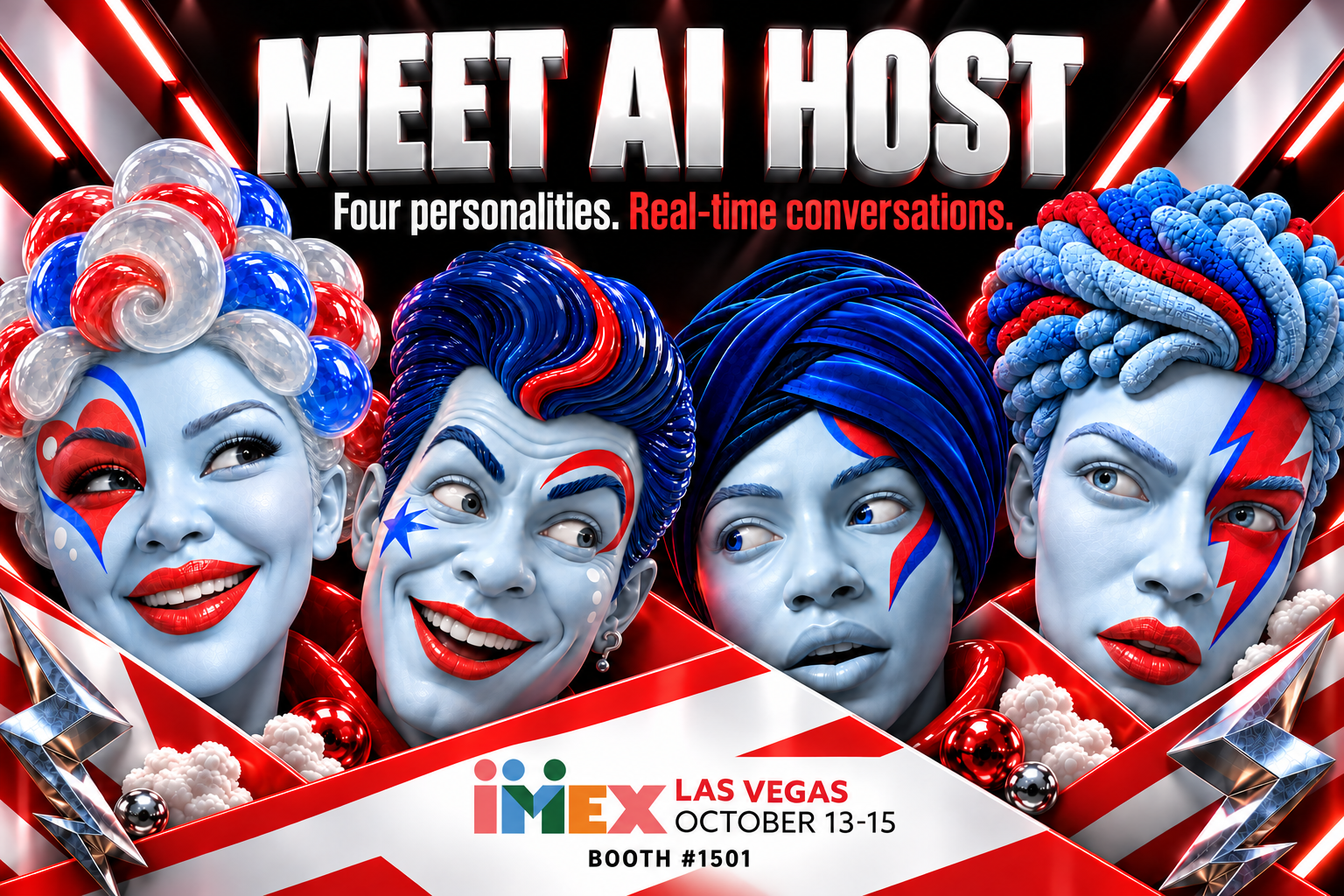
AI-driven content systems — including real-time generative visuals, interactive AI presenters, and audience-responsive environments — represent the current frontier of technology-driven stand design. NewMedia deployed a MetaHuman Choir installation at IMEX Frankfurt 2026 — four 3-meter LED screens displaying AI-driven digital performers that responded to audience interaction in real time — that became the most-visited activation at the event.
The Sustainability Case: Why Technology-Driven Stands Are Also the Green Choice
Single-use stand construction is fundamentally incompatible with corporate sustainability commitments. A brand that publishes ambitious ESG targets while commissioning new wood-and-vinyl builds for every trade show is creating a visible contradiction that increasingly sophisticated stakeholder audiences will notice.
Technology-driven stands eliminate the majority of stand waste streams. Aluminum framing systems last for ten or more years with proper maintenance. LED panels operate for 100,000 hours before requiring replacement. Modular flooring systems are reused event after event. The only consumables are digital content files — which generate no physical waste and can be produced and delivered remotely.
For brands subject to formal sustainability reporting requirements — which now includes the majority of Fortune 500 companies — switching to technology-driven stand design provides a concrete, measurable reduction in Scope 3 emissions from event marketing activities.
The Financial Case: Lower Total Cost of Ownership
Technology-driven stands require higher initial capital investment than conventional single-use builds. The LED systems, structural components, and interactive technology represent a meaningful upfront cost. But the total cost of ownership calculation over a three- to five-event lifecycle consistently favors the technology investment by significant margins.
A brand commissioning a new conventional stand for each of five annual trade shows might spend $40,000 to $80,000 per event in construction costs alone. The same brand investing in a technology-driven reusable stand system might spend $120,000 to $180,000 in year one and $15,000 to $25,000 per event in subsequent years for logistics, content, and operational support — producing savings of 40 to 60 percent over the lifecycle while simultaneously improving brand impact.
NewMedia's Approach to Technology-Driven Stand Design
NewMedia designs and produces technology-driven exhibition stands for clients at IMEX, IBTM, CES, BIO International, and major industry trade shows across the United States, Canada, and Europe. Our stands combine architectural design, LED and transparent display systems, interactive technology, and content production in a single integrated brief.
We own the technology we deploy, which means no third-party equipment rental markups and full technical support from our own production team throughout each event. Contact us at america@newmedia.events to discuss your next trade show program.
.webp)